Presented by David B. Givens (Center for Nonverbal Studies)
PRODUCT SELECTION AND THE EVOLUTION OF CONSUMER GOODS
Presented by David B. Givens (Center for Nonverbal Studies)
American Anthropological Association, Chicago Hilton & Towers Hotel, Thursday, November
18, 1999, in Private Dining Room 2, 3rd floor.
Session
4:00 pm-5:45 pm
TIME ON THEIR CLOCK: ANTHROPOLOGY IN, ABOUT AND FOR BUSINESSES
Organizer: Ken C Erickson. Chair: P L Sunderland, Ken C Erickson. Papers: P L Sunderland, David B
Givens, Marietta L Baba, Gerald Mars and Valerie Mars, Michael Hitchcock, Alain Robichaud and Susan
Gzesh. Discussant: Jean-Francois Chanlat
Abstract
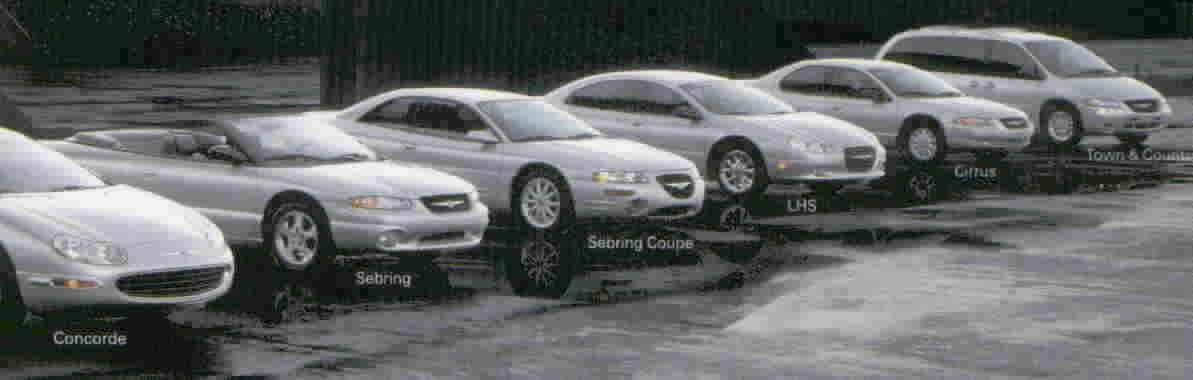
As material artifacts, consumer goods evolve through a process of product selection, paralleling that of natural selection in biology. Products, labels and brands not chosen by consumers become extinct, while selected items survive to live and sell another day. Interpreted nonverbally, successful products display messaging features--such as the Nike swoosh, the red tag on Levi's jeans and the mouth-shaped vehicular grille--designed to appeal to consumers as emotional signs. A messaging feature may be a meaningful mark, line, shape, pattern, seal, banner, badge, decoration, symbol, gloss, color, aroma, cadence, edging or spangle added to a product to transmit information rather than to provide functionality, durability, or strength. Using linear messaging features incorporated into the designed of the necktie, the Brooks Brothers suit and the vehicular stripe as examples, this paper shows how nonverbal signs work to (1) encourage product selection, and (2) promote the evolution of modern material culture, manufactured artifacts and consumer goods. (Copyright 1999 by the American Anthropological Association)
AAA Press Release: Darwin's Decorations
Product selection parallels the biological process of natural selection, says David Givens (Center
for Nonverbal Studies), where products become extinct or survive to live and sell another day.
Givens describes how nonverbal signs in clothing and packaging encourage product selection
and promote the evolution of modern material culture. (Copyright 1999 by the American
Anthropological Association)
[slide 1] Case 1: Visual cue
This 72 year-old consumer product is embossed, or made of enamel, vinyl, chrome, or steel. Through an optical illusion, its horizontal placement suggests "longer," "lower," and "faster." Pandemic throughout most of the world.
Your diagnosis is:
a) Design for a Jeepney
b) Wickerwork motif
c) Condominium fascia
d) Vehicular stripe
[slide 2 (fig. A)] Vehicular stripe
[slide 3a] Case 1: Decoding the message
It was an effort to make the car look longer and lower. --Harley Earl
Break-down into MESSAGING FEATURES:
A messaging feature is:
• A usually brief communication crafted into the design of a consumer product
• A meaningful mark, line, shape, pattern, brand, label, seal, banner, badge,
decoration, symbol, gloss, color, aroma, spice, cadence, tone, edging,
spangle, or appliqué added to a product to transmit information (rather
than, e.g., to provide functionality, durability, or strength)
• Through messaging features, consumer products "speak" to us as gestures
• Messaging features evolve through a process of product selection
• We choose products that function properly and "express themselves"
[slide 3b] Case 1: Decoding the message
Thin-horizontal lines
• Horizontal pinstripes painted by hand or by mechanical means
• Linear markings of chrome stripping or vinyl
• Stamped as embossments or indentations
• Run the length of a vehicle, bilaterally, below the windows
Evolution:
• Originated as a "beltline" design for the 1927 LaSalle
• Stripes decorate virtually all U.S. autos since 1927
Meaning:
• According to inventor Harley Earl, "This strip was placed there to eat up
the overpowering vertical expanse of that tall car."
• A single highlight should run the length of the car, like a theme or plot
• Originally painted by hand because mechanical lines are "dead" lines
• Perfectly ruled lines lack a hand-drawn line's "insouciant raciness"
Neurology:
• We are highly stimulated by edges, lines, and linear detail
• (Perhaps from a primate fascination with branches and trees)
• Horizontal lines add illusory "length"
• Vertical lines add illusory "standing height" (e.g., the necktie)
• Primary visual cortex contains orientation-selective neurons
• Only responsive to vertical or horizontal lines, or other linear angles
[slide 4] Points:
• Products speak nonverbally as gestures
• Consumers relate to products via messaging features
• Product evolution selects for ever-increasing expressivity
• To design or sell a product, know what it "says"
Benefits:
• Emotional triggers
• Focus group questions & strategies
• Design features
• Ad hooks & hot buttons
[slide 5] Case 2: Emotion cue
This 91 year-old, usually curvilinear product expresses "emotion" by mimicking perioral features, esp. our lips, tongue, and teeth. Reflecting facial mood signs--from the friendly smile to the angry tense-mouth--it is designed to show personality and "attitude," and command respect. Occurrence is pandemic throughout the world.
Your diagnosis is:
a) Big-screen TV emoticon
b) Totem-pole spirit face
c) Disney character
d) Vehicular grille
[slide 6 (fig. B)] Vehicular grille
[slide 7a] Case 2: Decoding the message
. . . resembling the silent-bared teeth face of monkeys and apes. --The Nonverbal Dictionary
MESSAGING FEATURES
• Facial expressions (smiles, frowns, tense lips, disgust, anger)
• Mouth parts (lips, gums, teeth, tusks, tongue)
• Run along the "face" end of buses, cars, and trucks
[slide 7b] Case 2: Decoding the message
Evolution:
1903 Ford Model A: neither grille nor vertical front-end
1908-1927 Model T: vertical front-end with framed radiator as "proto-grille"
1928 Model A: shapely, contoured radiator suggests a vertically ascending "nose"
1932 Lincoln: nose-like, V-type radiator was "high-brow"
1940s: grille design shifted from "noses" to "mouths"
1946 Mercury: aggressive, tooth-showing grille resembles angry bulldog
1946-2000: mouth motifs predominate; nose shapes inadvertently damage sales
(Note: nasal illusions help sales of "aristocratic" vehicles, such as Jaguar and Mercedes-Benz, which "look down their noses" at lesser automobiles)
1955 Mercury Montclair: redesigned bumper grille houses "teeth" and "tusks"
1955-57 Ford Thunderbird: features "tusks"; mouth-like grille shouts, "Hey!"
1958 Edsel: "horse-collar" grille dooms it to extinction
1963 Mercury Breezeway: adds tusk-like dual headlights to grille
1966 Mercury Comet Cyclone: tense-mouth grille is "toothless"
(Note: illusory hood scoops compensate for defanged look with "muscle")
1966 Mercury Cougar: introduces silent-bared teeth "smile face"
2000: Smile-face grilles predominate
[slide 7c] Case 2: Decoding the message
Neurology:
• Like a face, a grille is decoded in the anterior inferotemporal cortex
• Familiarity registers in superior temporal polysensory area
• Links between biting, chewing, showing fangs, genital erections, anger,
and fear are found in the anterior hypothalamus in a region of converging
nerve fibers involved in angry and defensive behavior
• Emotional impact of grilles registers subcortically in the amygdala
[slide 8] Case 3:Taste cue
This 31 year-old product "speaks" through the chemical medium of taste. Its meaty flavor is enhanced by the rush of primary salty, sour, and sweet ingredients which address tongue receptors directly, but have little effect on more discerning nerves of the nose. Occurrence: epidemic throughout much of the world.
Your diagnosis is:
a) Greek oven-cooked bread with opson
b) Pounded Hamburg steak
c) Domino's® pizza slice
d) Big Mac® sandwich
[slide 9 (fig. C)] Big Mac
[slide 10a] Case 3:Decoding the message
A mass-produced beef sandwich with stratified layers that mark an incredibly long prehistory in time. --The Nonverbal Dictionary
MESSAGING FEATURES
• Chemical signs: mainly taste
• Sesame seeds: nutty flavor primates crave
• Cooked beef: furans, pyrones, and other carbon, hydrogen, and
oxygen molecules provide complex onion, chocolate, nutty, fruity,
and caramel-like tastes we prefer to bland taste of uncooked flesh
• Pickles: add texture and primary sour taste
• Lettuce: soothing properties of magnesium
• Onions: volatile sulphur compounds
• Sauce: adds moisture; variant of thousand-island dressing (salad
oil, orange and lemon juice, minced onion, paprika, Worcestershire
sauce, dry mustard, parsley, and salt)
• American cheese: sends salty signals to tongue tip. Smoothness
blends well with coarse texture of beef. Flavorful fatty acids and
esters of glycerol satisfy a natural craving for fat
[slide 10b] Evolution:
• Encodes potpourri of flavor messages from the past
• Bread and meat an age-old combination. Oven-cooked bread
invented by Greeks and eaten with opson ("non-bread" veggies
and meats) on top. Open-faced sandwich later evolved as pizza.
• From Dark Ages to Renaissance, thick bread slices (trenchers)
prepared with meat and sauce on top, paving way for
double-decker sandwiches such as Big Mac
• Gherkins, eaten in India with salt or lemon juice for 3,000 years,
came to Europe during Renaissance. Sour tastes enjoyed with
lettuce since the Roman era
• Lactuca sativa (lettuce) preferred by the ancient Greeks above all other
greens; aided digestion
• Wild onions used 4,000 years ago by Egyptian peasants to season
bland meals. (Mummies included onions, wrapped in separate
bandages, as carry-out for afterlife)
• Sweet & sour sauces have flavored meats for thousands of years
• Cuneiform tablets place cheese in the Near East by 6,000 b.p.
[slide 10c] Case 3: Decoding the message
Neurology:
• Like primary colors, the basic bitter, salty, sour, and sweet tastes of fast-food coffee, fries, pickles, and soda make brash rather than subtle statements
• Subtleties of cabernet, truffles, and haute cuisine processed in higher brain
centers, capable of culinary learning
• Primary tastes of fast food handled subcortically
• In the thalamus
• And in a buried part of cerebral cortex, the insula, which is linked to the amygdala and the emotional limbic system
[slide 11] Case 4: Clothing cue
This 399 year-old product enabled men to seem "bigger," and present "larger" versions of themselves in public. Today its conservative design allows men and women to display a powerful, influential silhouette in business, military, and public affairs. Pandemic, worldwide.
Your diagnosis is:
a) Swim suit
b) Zoot suit
c) Birthday suit
d) Brooks Brothers suit
e) Business suit
[slide 12] Business suit
[slide 13a] Case 4: Decoding the message
Beowulf put on his warrior's dress, had no fear for his life. --Beowulf
MESSAGING FEATURES
• Downplay personal identity
• Showcase upper-body strength
• Strength cues from the broadside display
• Squared shoulders exaggerate size and "strength" of upright torso
• Jacket's hemline visually enlarges upper body to pongid (gorilla-like) proportions
• Flaring upward and outward, lapels enhance illusion of primate pectoral strength
• Pads & epaulets cover inadvertent shrugs
• Crisp, tailored look frames permanently established "wedge"
• Lapels lie flat, buttons blend in
• Shoulders firmly defined within jacket's stable edges and secure collar
[slide 13b] Evolution:
• Through product selection, suits became power uniforms
• Broadside display first appears in animal-hide clothing of
Neanderthals, ca. 200,000 years ago
• First solid evidence appears in Roman toga in 200 B.C. Men in
tunics draped wool or linen toga-cloths over left shoulder to make
upper body "thicker"--more formidable than in tunic alone
• From togas to doublets (1300s), to shortcoats (1600s), court coats
(1700s), and sport coats (1990s), clothing enabled men to seem
"bigger" and present "larger" versions of themselves in public
Conclusions & Discussion
Copyright 1999 (David B. Givens/Center for Nonverbal Studies)
Detail of Chrysler ad (copyright 1999 by Chrysler)