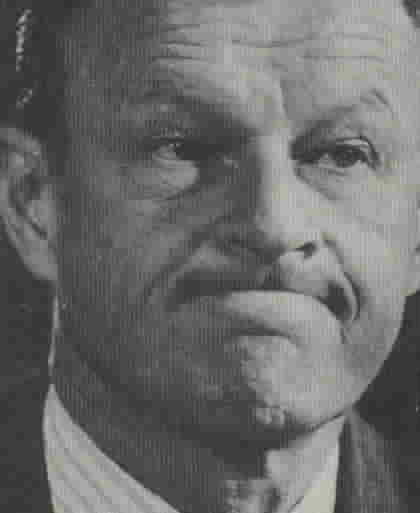
Facial expression. A usually negative cue produced by pressing the lips together into a thin line (see TENSE-MOUTH).
LIP-COMPRESSION
Facial expression. A usually negative cue produced by pressing the lips together into a thin line (see
TENSE-MOUTH).
Usage: A sudden lip-compression may signal the onset of anger, disliking, grief, sadness, or uncertainty.
Observation. Barely noticeable lip-clenching may signal unvoiced opposition or disagreement. Like other lip cues, in-rolling is controlled by "gut reactive" special visceral nerves.
Anatomy. At rest, the lips make gentle contact, and the teeth are slightly separated (see BLANK FACE). In lip-compression, the prime mover is orbicularis oris (both pars peripheralis and marginalis contract); the teeth may or may not touch.
RESEARCH REPORTS: 1. In rage, "The mouth is generally closed with firmness . . ." (Darwin 1872:236). 2. Apes express anger by staring, clenching the jaws, and compressing the lips (Chevalier-Skolnikoff 1973:80). 3. In chimpanzees, a compressed-lips face "typically accompanies aggression" (Goodall 1986:123). 4. "In an aggressive mood, the [bonobo chimpanzee's] lips are compressed in a tense face with frowning eyebrows and piercing eyes" (Waal and Lanting 1997:33). 5. In the Highlands of Papua New Guinea, when men were asked to show what they would do when angry and were about to attack, "They pressed their lips together" (Ekman 1998:238).
Neuro-notes. Lip-compression is an unconscious sign controlled by the limbic system acting through emotionally responsive paleocircuits of the facial nerve (cranial VII).
Copyright 1999, 2000 (David B. Givens/Center for Nonverbal Studies)