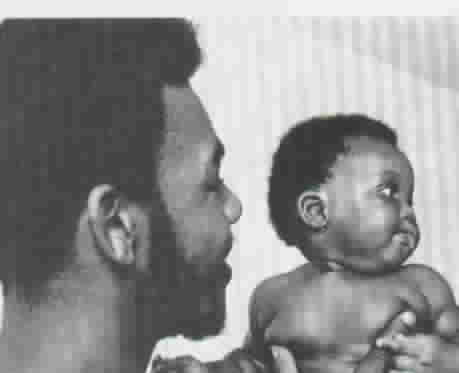
Body movement. A form of gaze avoidance in which the head is turned fully away to one side.
CUT-OFF
Body movement. A form of gaze avoidance in which the head is turned fully away to one side.
Usage: In a conversation, a sudden cut-off gesture may indicate uncertainty or disagreement with a speaker's remarks. Sustained cut-off may reveal shyness or disliking.
Salesmanship. One signal of a prospect's skepticism: "Looking suddenly up and to the side" (Delmar 1984:46).
RESEARCH REPORTS: 1. Facing away is a reaction to spatial invasion (Sommer 1969). 2.
"After the host and the various guests embraced, they backed off and one or both always looked
away. [Adam] Kendon calls this the cut-off and thinks it may be an equilibrium-maintaining
device [to re-establish a proper level of intimacy]" (Davis 1971:46). 3. ". . . we have repeatedly
seen in normal 3- to 4-month-old infants extreme head aversion function to terminate intrusive
maternal behavior" (Stern 1974:188-89). 4. "In all cases [in the presence of strange adults] boys
turn their heads away to the side more than do girls" (Stern and Bender 1974:241). 5. Gaze
aversion "increased dramatically" in conditions of crowding (Baxter and Rozelle 1975:46).
Copyright © 1998 - 2001 (David B. Givens/Center for Nonverbal Studies)
Photo detail copyright 1978 by Johnson & Johnson