| Index to this page |
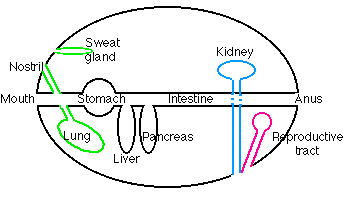 The diagram shows the major topological relationships in the body. The linings of all
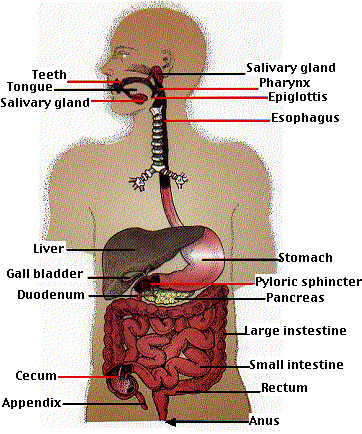 Food placed in the mouth is
Parietal cells contain a H+ ATPase. This transmembrane protein secretes H+ ions (protons) by active transport, using the energy of ATP. The concentration of H+ in the gastric juice can be as high as 0.15 M, giving gastric juice a pH somewhat less than 1. With a concentration of H+ within these cells of only about 4 x 10⁻⁸ M, this example of active transport produces more than a million-fold increase in concentration. No wonder that these cells are stuffed with mitochondria and are extravagant consumers of energy.
Intrinsic factor is a protein that binds ingested vitamin B12 and enables it to be absorbed by the intestine. A deficiency of intrinsic factor — as a result of an autoimmune attack against parietal cells — causes pernicious anemia.
The "chief" cells synthesize and secrete pepsinogen, the precursor to the proteolytic enzyme pepsin.
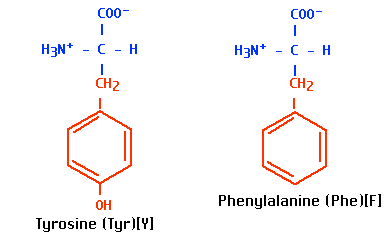
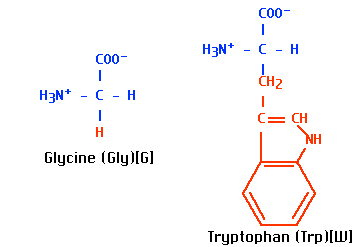
Pepsin cleaves peptide bonds, favoring those on the C-terminal side of tyrosine, phenylalanine, and tryptophan residues. Its action breaks long polypeptide chains into shorter lengths.
Secretion by the gastric glands is stimulated by the hormone gastrin. Gastrin is released by endocrine cells in the stomach in response to the arrival of food.
Very little occurs. However, some water, certain ions, and such drugs as aspirin and ethanol are absorbed from the stomach into the blood (accounting for the quick relief of a headache after swallowing aspirin and the rapid appearance of ethanol in the blood after drinking alcohol).
As the contents of the stomach become thoroughly liquefied, they pass into the duodenum, the first segment (about 10 inches long) of the small intestine.
Two ducts enter the duodenum:
Bile contains:
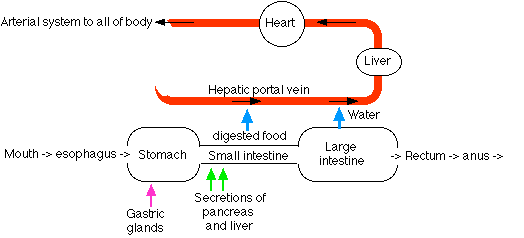
The capillary beds of most tissues drain into veins that lead directly back to the heart. But blood draining the intestines is an exception. The veins draining the intestine lead to a second set of capillary beds in the liver. Here the liver removes many of the materials that were absorbed by the intestine:
The liver serves as a gatekeeper between the intestines and the general circulation. It screens blood reaching it in the hepatic portal system so that its composition when it leaves will be close to normal for the body.
Furthermore, this homeostatic mechanism works both ways. When, for example, the concentration of glucose in the blood drops between meals, the liver releases more to the blood byThe pancreas consists of clusters if endocrine cells (the islets of Langerhans) and exocrine cells whose secretions drain into the duodenum.
Pancreatic fluid contains:| In April 1999, the FDA approved orlistat as a treatment for obesity. Orlistat inactivates pancreatic lipase. About one-third of ingested fats fails to be broken down into absorbable fatty acids and monoglycerides and simply passes out in the feces. |
| Trypsin, chymotrypsin, and elastase are members of the family of serine proteases. Link to discussion. |
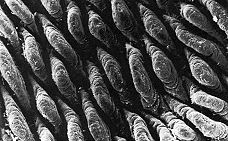
Digestion within the small intestine produces a mixture of disaccharides, peptides, fatty acids, and monoglycerides. The final digestion and absorption of these substances occurs in the villi, which line the inner surface of the small intestine.
This scanning electron micrograph (courtesy of Keith R. Porter) shows the villi carpeting the inner surface of the small intestine.
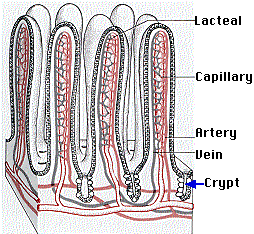 The crypts at the base of the villi contain stem cells that continuously divide by mitosis producing
| Link to Gut Hormones. |
All of these cells replace older cells that continuously die by apoptosis.
The villi increase the surface area of the small intestine to many times what it would be if it were simply a tube with smooth walls. In addition, the apical (exposed) surface of the epithelial cells of each villus is covered with microvilli (also known as a "brush border"). Thanks largely to these, the total surface area of the intestine is almost 200 square meters, about the size of the singles area of a tennis court and some 100 times the surface area of the exterior of the body.
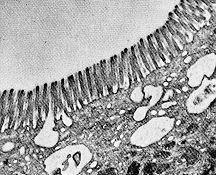
The electron micrograph (courtesy of Dr. Sam L. Clark) shows the microvilli of a mouse intestinal cell.
Incorporated in the plasma membrane of the microvilli are a number of enzymes that complete digestion:The large intestine receives the liquid residue after digestion and absorption are complete. This residue consists mostly of water as well as materials (e.g. cellulose) that were not digested. It nourishes a large population of bacteria (the contents of the small intestine are normally sterile). Most of these bacteria (of which one common species is E. coli) are harmless. And some are actually helpful, for example, by synthesizing vitamin K. Bacteria flourish to such an extent that as much as 50% of the dry weight of the feces may consist of bacterial cells.
| How one harmless species avoids attack by its host's immune system. |
Reabsorption of water is the chief function of the large intestine. The large amounts of water secreted into the stomach and small intestine by the various digestive glands must be reclaimed to avoid dehydration. If the large intestine becomes irritated, it may discharge its contents before water reabsorption is complete causing diarrhea. On the other hand, if the colon retains its contents too long, the fecal matter becomes dried out and compressed into hard masses causing constipation.
| Welcome&Next Search |